

How to Choose the Right Drip Irrigation System for Your Farm
Choosing a best farm drip irrigation system isn’t just a one-time purchase, it’s a long-term decision that affects your water use, crop quality, and overall farm efficiency. With so many options available, it helps to know what really matters before you invest.
Here’s a simple guide to help you select the right setup for your farm and make the most out of modern irrigation technology.
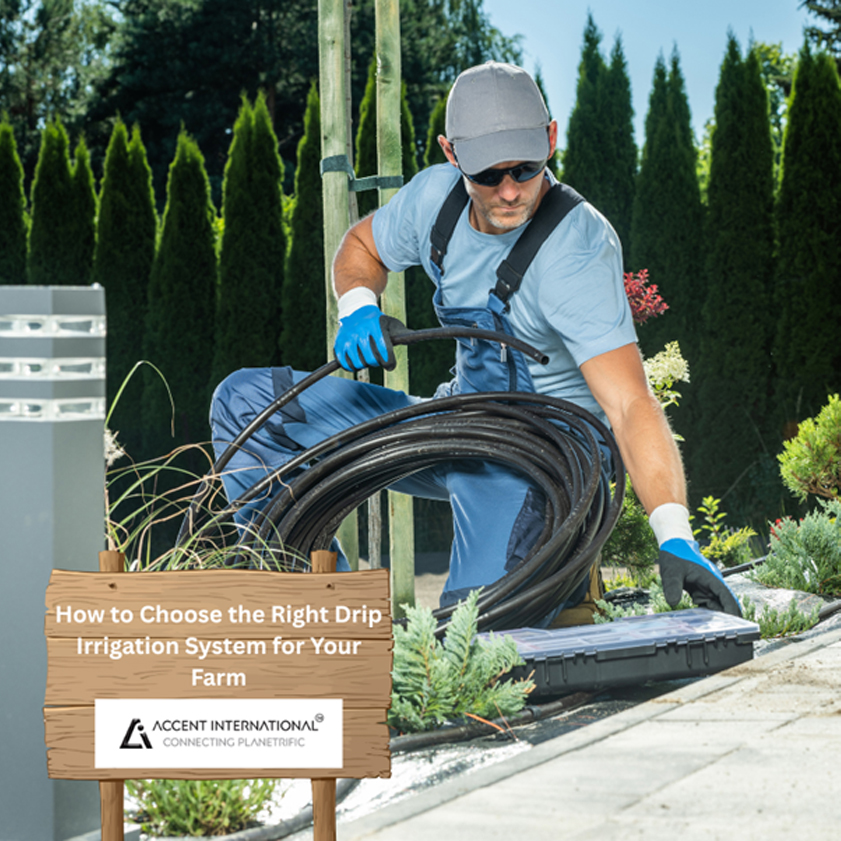
Understand Your Farm’s irrigation Water Requirements
Before buying anything, get clear on how much water your crops actually need.
Different crops, soil types, and climates require different flow rates.
Key points to check before choosing Drip Irrigation System
- Soil type (sandy, loamy, clay)
- Crop water demand
- Available water pressure and source
- Field layout and size
A system that fits these basics will save water and keep your crops healthier.
Choose the Right Drip Irrigation System Pipes
Your pipes are the backbone of the entire system. Quality matters because a poor pipe can easily crack, clog, or degrade under sunlight.
What to look for
- UV-resistant black polyethylene material
- Proper wall thickness suitable for your crop spacing
- Uniform water discharge along the line
- Durability against field conditions
Accent International, one of India’s leading manufacturers and exporters, offers high-quality drip irrigation pipes designed for long-term performance.
You can explore their options here: https://accentinternationals.com/drip-irrigation-pipes
Select the Right Emitters and Drippers
Emitters control how much water reaches each plant.
Choosing the right type means your crops get steady, predictable moisture.
Emitter options
- Inline drippers – Great for row crops
- Online drippers – Ideal for orchards and widely spaced plants
- Pressure-compensating drippers – Maintain uniform flow even in uneven terrain
Your crop spacing will guide which type suits your field best.
Look at Filtration and Clogging Prevention
Even the best Drip Irrigation pipes won’t help if the system clogs.
A proper filter protects your emitters from sand, silt, and algae.
Filter types
- Screen filter
- Disc filter
- Sand filter (for poor water quality)
A reliable filtration system keeps maintenance low and extends the life of your drip system.
Consider Automation for Better Control
Modern farms are moving toward automation because it saves time and optimizes water usage.
Automation options
- Timers and controllers
- Soil-moisture sensors
- Pressure regulators
- Smart valves
Automation helps maintain consistency, especially useful during peak seasons.
Evaluate the Drip Irrigation System’s Durability and Warranty
A good drip irrigation system should last several years without constant repairs.
When choosing your system, check:
- Material quality
- UV protection
- Manufacturer warranty
- Field-tested durability
Accent International is known for producing rugged, long-lasting drip irrigation equipment that performs well across various soil and climate conditions.
Check Compatibility With Your Crops
The spacing, diameter, and discharge rate should match the crop pattern.
For example
- Vegetables: closer spacing + lower discharge
- Orchards: wider spacing + higher discharge
- Nurseries: flexible, adjustable drippers
Matching your system with your crop needs improves yield and lowers water waste.
Work With a Trusted Drip Irrigation System Manufacturer from India
The quality of your drip irrigation system depends on who built it.
Choosing a reliable manufacturer ensures proper guidance, high material quality, and dependable after-sales support.
Accent International has earned its place as one of India’s leading manufacturers and exporters of drip irrigation systems, offering solutions for farms of all sizes.
Explore more on their website:
https://accentinternationals.com/drip-irrigation-pipes/