
UPVC, CPVC, and HDPE Pipes Explained: Applications, Benefits & Selection Guide
Complete Guide to Choosing the Right Pipe for Plumbing, Water Supply, Agriculture, and Industrial Applications
Selecting the right piping system is one of the most important decisions for any construction, plumbing, agricultural, or industrial project. Whether you’re designing a residential plumbing network, installing an irrigation system, or building an industrial fluid transportation line, choosing between UPVC pipes, CPVC pipes, and HDPE pipes can significantly impact performance, durability, maintenance costs, and long-term reliability.
Each pipe material offers unique advantages and is engineered for specific applications. Understanding the differences between them helps engineers, contractors, builders, distributors, and project owners make informed decisions.
In this comprehensive guide, we’ll compare UPVC vs CPVC vs HDPE pipes, explore their applications, benefits, and help you determine which piping solution best suits your project.
What are UPVC Pipes?
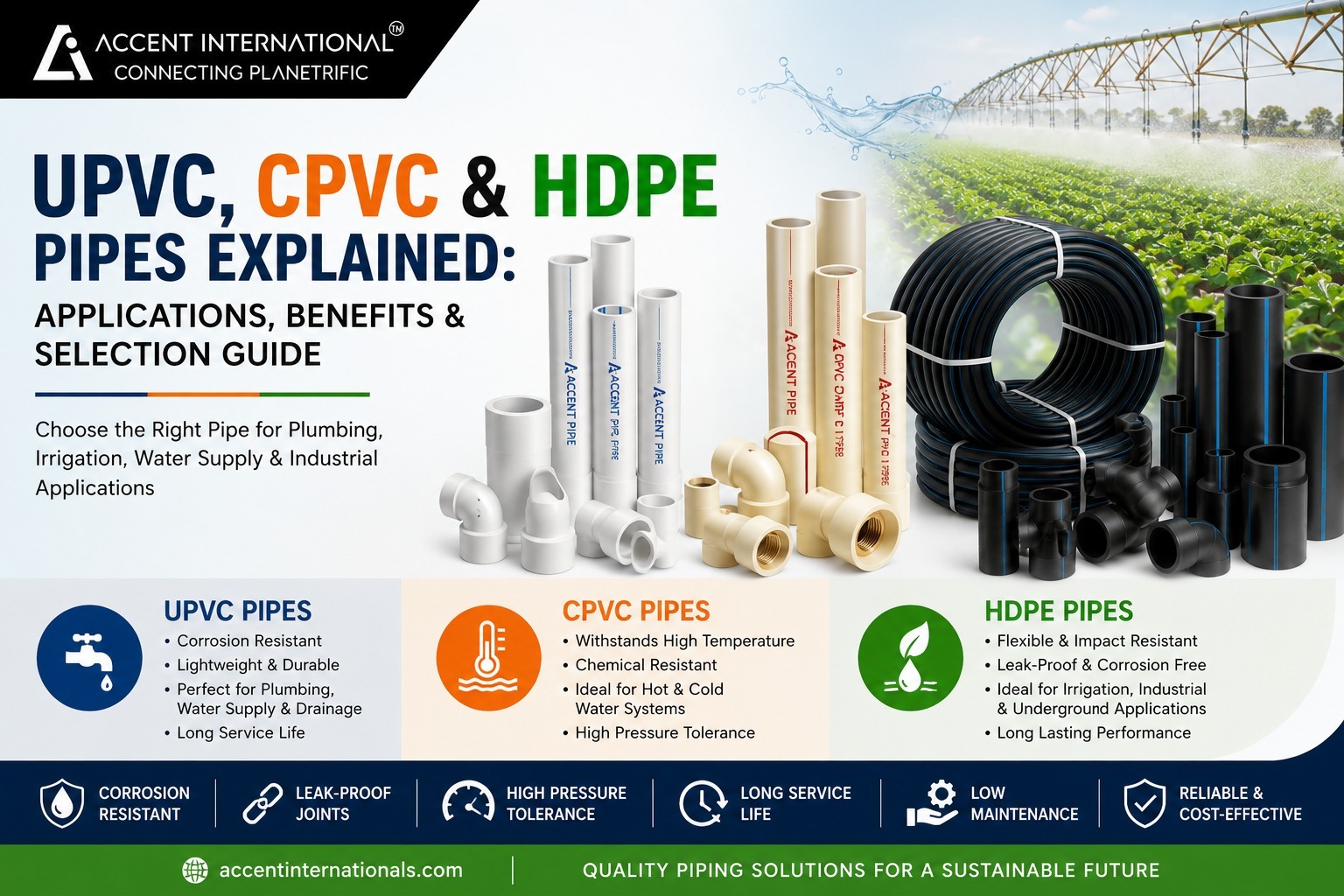
UPVC (Unplasticized Polyvinyl Chloride) pipes, best pipe for plumbing are rigid, lightweight plastic pipes widely used in water supply systems, drainage networks, agricultural irrigation, and construction projects. Unlike standard PVC, UPVC contains no plasticizers, making it stronger, corrosion-resistant, and environmentally friendly.
Common Applications of UPVC Pipes
- Drinking water supply systems
- Agricultural irrigation
- Plumbing systems
- Borewell casing
- Underground drainage
- Rainwater harvesting
- Sewerage systems
- Industrial water distribution
Benefits of UPVC Pipes
- Corrosion and rust resistant
- Lightweight and easy to install
- Long service life (50+ years)
- Leak-proof joints
- Low maintenance
- Excellent chemical resistance
- Smooth inner surface for better water flow
- Cost-effective solution
UPVC pipes are particularly suitable for cold water distribution and general plumbing applications.
What are CPVC Pipes?
CPVC (Chlorinated Polyvinyl Chloride) pipes are manufactured by chlorinating PVC resin, enabling them to withstand higher temperatures and pressures.
Because of their excellent heat resistance, CPVC pipes are widely used in residential, commercial, and industrial hot water plumbing systems.
Common Applications of CPVC Pipes
- Hot and cold water plumbing
- Residential buildings
- Commercial complexes
- Hotels and hospitals
- Industrial process piping
- Chemical transportation
- Fire sprinkler systems
Benefits of CPVC Pipes
- Excellent heat resistance
- High pressure tolerance
- Corrosion resistant
- Chemical resistant
- Long service life
- Low thermal conductivity
- Easy installation
- Low maintenance
CPVC pipes are ideal where hot water transportation and temperature resistance are essential.
What are HDPE Pipes?
HDPE (High-Density Polyethylene) pipes are among the most durable and flexible piping solutions available today. Manufactured from high-density polyethylene, they are known for their exceptional strength, flexibility, and resistance to environmental stress.
HDPE pipes have become the preferred choice for large-scale water supply, irrigation, mining, gas distribution, and industrial applications.
Common Applications of HDPE Pipes
- Agricultural irrigation systems
- Drip irrigation
- Sprinkler irrigation
- Municipal water supply
- Industrial pipelines
- Mining operations
- Wastewater management
- Gas distribution
- Telecom ducting
- Cable protection
- Infrastructure projects
Benefits of HDPE Pipes
- Superior flexibility
- Corrosion-free performance
- Leak-proof fusion joints
- UV resistant
- High impact strength
- Earthquake resistant
- Lightweight
- Low maintenance
- Long service life exceeding 50 years
- Excellent pressure resistance
HDPE pipes perform exceptionally well in underground installations and harsh environmental conditions.
UPVC CPVC and HDPE Pipes Benefits: Key Differences
Feature | UPVC Pipes | CPVC Pipes | HDPE Pipes |
Water Temperature | Cold Water | Hot & Cold Water | Cold Water & Industrial Fluids |
Flexibility | Low | Medium | High |
Corrosion Resistance | Excellent | Excellent | Excellent |
Heat Resistance | Moderate | High | Moderate |
Pressure Handling | Good | Very Good | Excellent |
Chemical Resistance | High | Very High | Excellent |
Installation | Easy | Easy | Fusion Welding |
Lifespan | 50+ Years | 50+ Years | 50–100 Years |
Best Applications | Plumbing & Drainage | Hot Water Plumbing | Irrigation & Infrastructure |
How to Choose the Right Pipe?
Choose UPVC Pipes If You Need:
- Residential plumbing
- Agricultural irrigation
- Drainage systems
- Water supply lines
- Cost-effective piping solutions
Choose CPVC Pipes If You Need:
- Hot water supply
- Commercial plumbing
- Industrial chemical handling
- Fire sprinkler systems
- High-temperature applications
Choose HDPE Pipes If You Need:
- Irrigation systems
- Municipal water supply
- Underground pipelines
- Industrial fluid transportation
- Mining projects
- Infrastructure development
- Long-distance water transmission
Industries That Use UPVC, CPVC, and HDPE Pipes
These piping systems are trusted across a wide range of industries, including:
- Agriculture
- Construction
- Infrastructure
- Municipal Water Supply
- Industrial Manufacturing
- Chemical Processing
- Oil & Gas
- Mining
- Wastewater Management
- Telecommunications
- Plumbing
- Fire Protection
Why Quality Pipes Matter?
Selecting high-quality pipes reduces maintenance costs, minimizes downtime, and improves overall system reliability. Premium piping solutions offer:
- Longer operational life
- Better flow efficiency
- Lower maintenance
- Leak-free performance
- Improved safety
- Higher return on investment
Choosing certified products from a trusted manufacturer ensures consistent quality and dependable performance.
Accent International – Your Trusted Partner for Quality Piping Solutions
Accent International is a leading manufacturer and exporter of premium piping solutions designed to meet the needs of agricultural, industrial, plumbing, and infrastructure projects worldwide.
Our product portfolio includes:
- UPVC Pipes
- CPVC Pipes
- HDPE Pipes
- Pipe Fittings
- Irrigation Systems
- Agricultural Water Management Solutions
Every product is manufactured using high-quality raw materials and strict quality control processes to ensure durability, efficiency, and long-term performance.
Whether you’re a contractor, distributor, project consultant, or international buyer, Accent International delivers reliable piping solutions tailored to your requirements.
Frequently Asked Questions (FAQs)
Which is better: UPVC, CPVC, or HDPE pipes?
Each has a specific purpose. UPVC is ideal for cold water and drainage, CPVC is best for hot water systems, while HDPE is preferred for irrigation, underground pipelines, and industrial applications.
Can HDPE pipes be used for drinking water?
Yes. Food-grade HDPE pipes are widely used for potable water supply because they are non-toxic, corrosion-resistant, and leak-proof.
Are CPVC pipes suitable for hot water?
Yes. CPVC pipes are specifically designed to handle hot and cold water distribution and can withstand higher temperatures than UPVC pipes.
What is the lifespan of UPVC, CPVC, and HDPE pipes?
With proper installation and maintenance, all three types typically provide a service life of 50 years or more, with HDPE pipes often exceeding 100 years under ideal conditions.