How to Choose uPVC Agriculture Pressure Pipes for Irrigation and Water Supply
Agricultural irrigation systems depend on more than just sprinklers, drip lines, or pumps. The pipe carrying water from the source to the field must be selected according to pressure, distance, flow requirement, installation method, and the type of irrigation system. This is why uPVC agriculture pressure pipes are widely used for farm water supply, irrigation mains, and distribution pipelines.
What Are uPVC Agriculture Pressure Pipes?
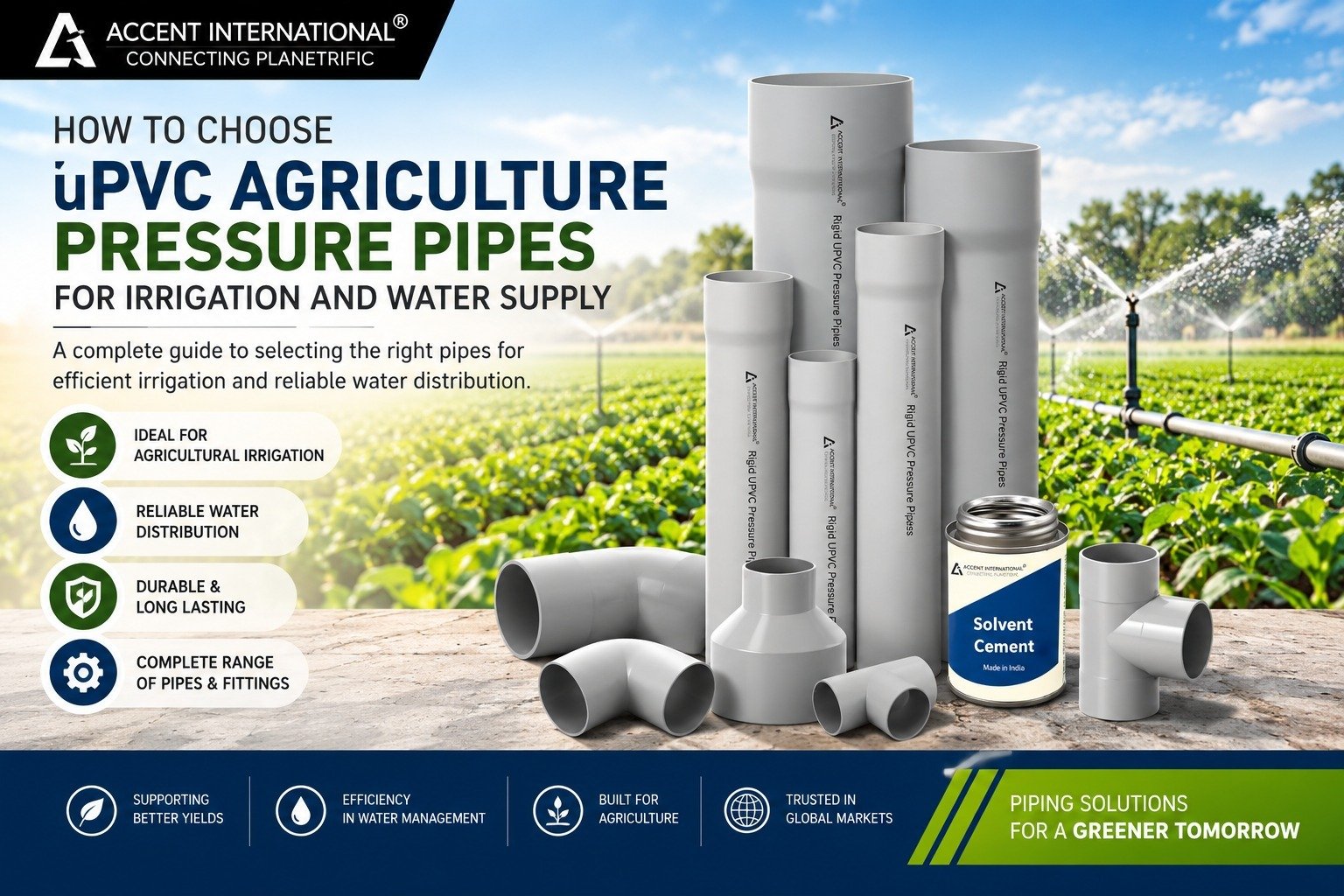
uPVC agriculture pressure pipes are rigid pipes designed to transport water under pressure. They are commonly used in agricultural irrigation systems, sprinkler networks, water distribution lines, and connections between pumps or water sources and fields.
Their smooth internal surface helps water move through the pipeline with relatively low friction, while the rigid construction makes them suitable for fixed agricultural installations. Unlike metal pipes, uPVC does not rust, making it useful in outdoor irrigation environments where moisture and fertilizers are present.
Why Pipe Size Matters in Irrigation?
Choosing the correct agriculture pressure pipe size is important because the pipeline must carry the required volume of water without creating unnecessary pressure loss.
Smaller pipes may work for branch lines or lower-flow applications, while larger diameters are generally considered for mainlines carrying water to several irrigation zones. Buyers commonly search for 3 inch agriculture pipes, 4 inch agriculture pipes, 90mm agriculture pipes, and 110mm agriculture pipes because pipe diameter is directly connected to the water flow required by a particular system.
The right size should therefore be selected according to pump capacity, pipeline length, number of outlets, and required flow rather than simply choosing the largest available pipe.
Selecting the Correct Pressure Class
Pressure is another important factor when choosing uPVC pressure pipes for agriculture. The pipe needs to handle the normal operating pressure of the irrigation system as well as pressure changes that can occur during operation.
Agricultural uPVC pressure pipes are available in different pressure classes. The appropriate class depends on the pump, elevation changes, pipeline design, and working pressure of the system. Selecting a pipe based only on price can create problems later if the pipe is not suitable for the actual operating conditions.
Agriculture Pipes and Fittings Work Together
A good irrigation pipeline is not only about the pipe. Agriculture pipes and fittings need to work as one system. Elbows, tees, reducers, couplers, valves, and other connections should be compatible with the selected pipe diameter and jointing method.
Proper installation is also important. Correct alignment, suitable joining, adequate support, and protection from unnecessary mechanical stress can help maintain the performance of the pipeline.
uPVC Pressure Pipes for Different Irrigation Applications
Rigid uPVC pipes can be used in different parts of an agricultural water network, including irrigation mainlines, sprinkler irrigation systems, drip irrigation sub-main lines, farm water supply, and water distribution pipelines.
The choice depends on the design of the irrigation system. A sprinkler installation, for example, may require a different flow and pressure arrangement from a drip irrigation network.
Choosing the Right uPVC Agriculture Pipe
When comparing agriculture pressure pipe prices, look beyond the initial cost. Diameter, pressure class, fittings, jointing method, transportation, installation requirements, and expected service life all influence the overall cost of an irrigation pipeline.
Accent International offers rigid uPVC pressure pipes and fittings for agricultural irrigation and water supply applications, with options covering different diameters and pressure classes. Selecting the correct pipe according to the actual system requirement helps create a more reliable and practical irrigation network.
For detailed specifications, sizes, pressure classes, and available options, explore Rigid uPVC Pressure Pipes.
Frequently Asked Questions :
What are uPVC agriculture pressure pipes used for?
uPVC agriculture pressure pipes are used to carry water under pressure in irrigation mainlines, sprinkler systems, drip irrigation sub-main lines, and farm water distribution networks.
How do I choose the right size of agriculture pressure pipe?
Choose the pipe size according to required water flow, pump capacity, pipeline length, number of outlets, and pressure requirements. Common agricultural sizes include 90 mm, 110 mm, 3 inch, and 4 inch.
What pressure class should I choose for an irrigation pipe?
The pressure class should match the actual working pressure of the irrigation system, considering pump pressure, elevation changes, and possible pressure fluctuations. Avoid selecting a pipe based only on price.
Are uPVC agriculture pipes suitable for sprinkler and drip irrigation?
Yes. Rigid uPVC pressure pipes can be used for sprinkler irrigation, drip irrigation sub-main lines, agricultural water supply, and other pressurized water distribution applications, provided the pipe size and pressure class are suitable for the system.