

How to Maintain HDPE Pipes for Long-Term Performance?
High-Density Polyethylene (HDPE) pipes have become the preferred choice for modern irrigation systems, water supply networks, industrial applications, and infrastructure projects. Known for their flexibility, durability, corrosion resistance, and long service life, HDPE pipes can perform efficiently for 50 years or more when properly maintained.
However, even the most durable piping systems require regular inspection and preventive maintenance to ensure optimal performance and avoid costly repairs.
In this guide, we’ll explore the best practices for maintaining HDPE pipes, common issues to watch for, and practical tips to maximize their lifespan and efficiency.
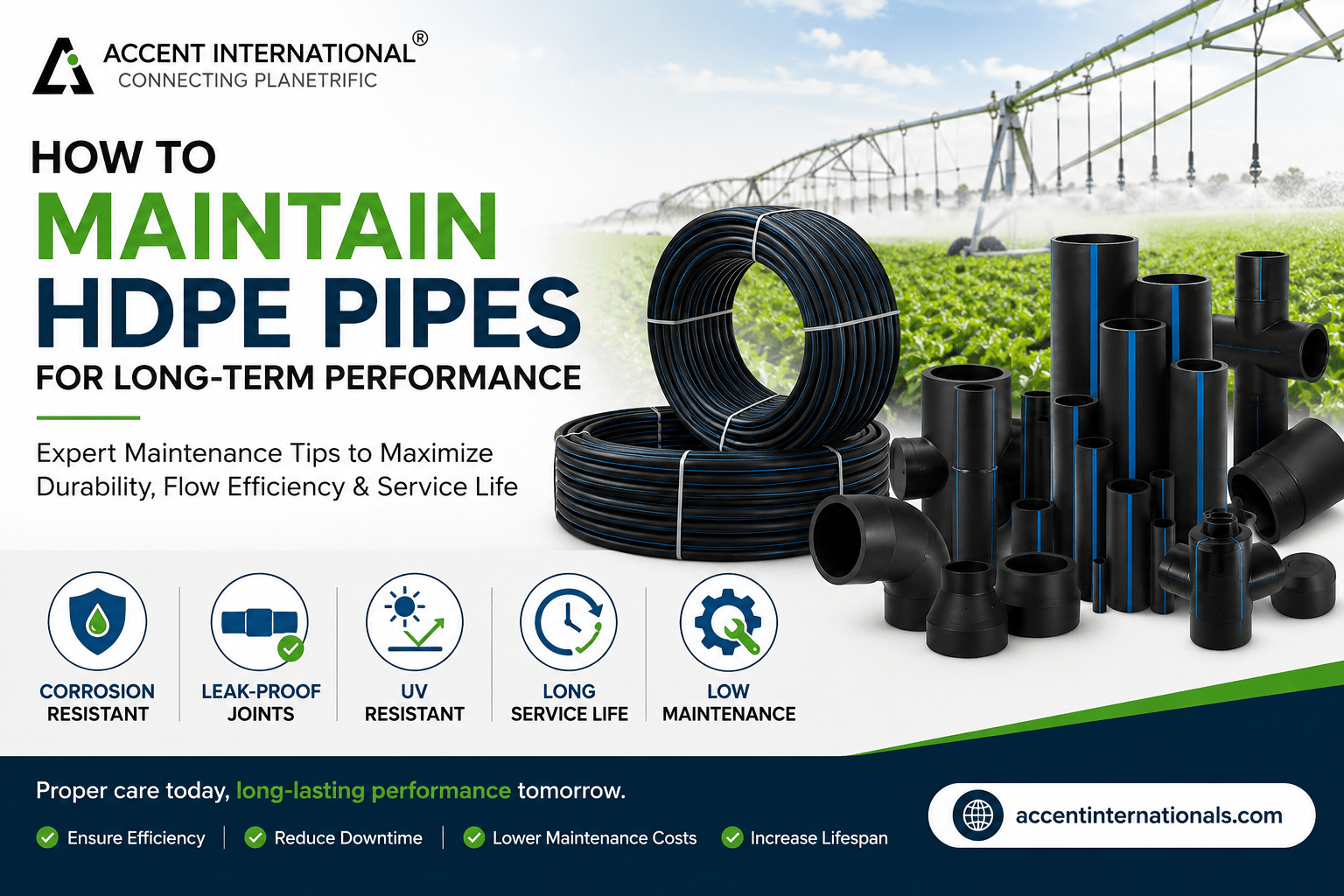
Why HDPE Pipes Are Widely Preferred
Key Benefits of HDPE Pipes
- Excellent corrosion resistance
- High impact strength
- Leak-proof fusion joints
- UV-resistant options for outdoor use
- Flexible and easy to install
- Low maintenance requirements
- Long service life exceeding 50 years
These advantages make HDPE pipes ideal for agricultural irrigation, potable water distribution, wastewater systems, mining operations, and industrial fluid transportation.
Conduct Regular Visual Inspections
Routine inspections are the first step in maintaining HDPE piping systems.
Inspect for:
- Surface damage
- Cracks or abrasions
- Joint integrity
- Pipe deformation
- Signs of leakage
- Excessive bending or stress points
Early detection of minor issues helps prevent major failures and extends the life of the system.
Pro Tip:
Schedule inspections every 3–6 months for irrigation systems and more frequently for industrial applications.
Prevent Excessive Pressure Build-Up
Although HDPE pipes are designed to withstand significant pressure, operating consistently above recommended limits can reduce their lifespan.
Best Practices:
- Install pressure-regulating valves
- Monitor system pressure regularly
- Avoid sudden pressure surges (water hammer)
- Ensure pumps are properly calibrated
Maintaining optimal pressure levels protects both pipes and fittings from premature wear.
Keep Pipes Clean and Free from Blockages
Sediment, algae, minerals, and debris can accumulate inside pipelines over time, reducing water flow and system efficiency.
Cleaning Methods:
- Periodic flushing
- High-velocity water cleaning
- Filtration systems
- Routine maintenance of irrigation filters
Clean pipelines improve water delivery and reduce strain on pumps and valves.
Protect HDPE Pipes from Mechanical Damage
While HDPE pipes are highly durable, physical impacts from heavy machinery, excavation equipment, or improper handling can compromise their structure.
Protection Measures:
- Use proper pipe supports
- Avoid dragging pipes during installation
- Mark underground pipe routes clearly
- Follow recommended burial depths
Mechanical protection is especially important in agricultural and construction environments.
Monitor Fusion Joints and Connections
One of the biggest advantages of HDPE pipes is their leak-free fusion joints. However, joints should still be inspected periodically.
Check for:
- Joint misalignment
- External stress
- Unusual movement
- Signs of leakage
Professional fusion welding during installation significantly reduces future maintenance requirements.
Manage UV Exposure for Outdoor Installations
Modern HDPE pipes often contain UV stabilizers, but prolonged exposure to extreme sunlight can still affect long-term performance.
Recommended Solutions:
- Use UV-stabilized HDPE pipes
- Apply protective coverings when necessary
- Store unused pipes in shaded areas
Proper UV protection helps maintain structural integrity in outdoor applications.
Prevent Chemical Damage
Although HDPE pipes are resistant to many chemicals, prolonged exposure to highly aggressive substances may impact performance.
Recommendations:
- Verify chemical compatibility before installation
- Follow manufacturer guidelines
- Conduct periodic inspections in industrial environments
Choosing the correct pipe grade is essential for chemical transport applications.
Avoid Improper Pipe Bending
HDPE pipes offer excellent flexibility, but excessive bending beyond specified limits can create stress points.
Best Practices:
- Follow manufacturer bending radius guidelines
- Use proper fittings where necessary
- Avoid sharp directional changes
Correct installation techniques minimize long-term structural stress.
Maintain Irrigation System Components
For agricultural applications, HDPE pipes work alongside several critical components:
- Filters
- Emitters
- Valves
- Pumps
- Sprinklers
A poorly maintained irrigation system can place unnecessary strain on the piping network.
Regular servicing ensures optimal water flow and system efficiency.
Keep Accurate Maintenance Records
Documenting inspections, repairs, pressure readings, and maintenance activities provides valuable insights into system performance.
Maintenance records help:
- Identify recurring issues
- Plan preventive maintenance
- Extend asset lifespan
- Reduce operational costs
A proactive maintenance approach is always more cost-effective than emergency repairs.
Common Problems That Affect HDPE Pipe Performance
Even though HDPE pipes require minimal maintenance, operators should remain alert for:
- Water hammer effects
- Excessive pressure fluctuations
- Poor installation practices
- Mechanical impacts
- Blockages and sediment buildup
- Improper fusion welding
Addressing these issues early can prevent system downtime and expensive replacements.
Why Quality HDPE Pipes Matter
Maintenance alone cannot compensate for poor-quality piping materials. Investing in premium HDPE pipes from a trusted manufacturer ensures:
- Superior durability
- Consistent performance
- Leak-free operation
- Reduced maintenance costs
- Longer service life
High-quality HDPE pipes provide greater reliability across agricultural, industrial, and infrastructure applications.
Accent International: Trusted HDPE Pipe Solutions
Accent International supplies high-performance HDPE pipes and fittings designed to meet the demands of modern irrigation, water distribution, and industrial systems. Manufactured to stringent quality standards, our HDPE piping solutions offer exceptional durability, corrosion resistance, and long-term reliability.
Whether you’re managing agricultural irrigation projects or large-scale infrastructure developments, Accent International provides dependable piping solutions that support efficient water management and sustainable growth.
Final Thoughts
HDPE pipes are among the most reliable and cost-effective piping solutions available today. With proper maintenance practices such as routine inspections, pressure management, cleaning, UV protection, and professional installation, businesses and farmers can maximize the lifespan and performance of their piping systems.
Investing in quality HDPE pipes and implementing a preventive maintenance strategy will help ensure efficient operation, lower maintenance costs, and long-term value for years to come.